Ein kurzes Heads-up zu den aktuellen NetScaler Security Updates, konkret zum CVE-2026-88778: Wie beim Review des aktuellen Citrix Security Bulletins klar wurde, bietet ein reines Firmware-Update noch keinen vollständigen Schutz.
Um die Appliances abzusichern, muss bei allen NetScalern zwingend ein TCP-Parameter angepasst werden.
Aktuellen Status prüfen:
show ns tcpparam | grep "Enhanced ISN Generation"
Fix aktivieren:
set ns tcpparam -enhancedISNgeneration ENABLED
(Vergesst nicht, die Config im Anschluss mit save config zu speichern!)
Glücklicherweise gibt es zu diesem CVE-2026-88778 noch keine Meldungen von erfolgreich durchgeführten Attacken. Trotzdem empfiehlt die AXACOM AG dieses Hardening durchzuführen!
Bei unseren ROX Managed- und Updateservice Kunden werden wir das Hardening im Rahmen des nächsten Wartungsfensters automatisch verteilen.
Bei Fragen oder allfälliger benötigter Hilfestellung, stehen wir euch über euer AXACOM Support Portal bereit.
Zukunftssichere Zertifikatsverwaltung im Zeitalter der 47-Tage-Zyklen – effizient, ressourcenschonend und vollautomatisch.
Die Lebensdauer von SSL/TLS-Zertifikaten sinkt bis 2029 drastisch. Die vom CA/B Forum beschlossene Massnahme sieht vor, die Gültigkeitsdauer von Zertifikaten schrittweise von derzeit 199 Tagen auf 47 Tage zu verkürzen. Somit wird aus einer jährlichen Aufgabe bald eine monatliche Pflicht. Für Unternehmen, die Citrix Netscaler (ADC) im Einsatz haben, bedeutet diese Entwicklung das Ende der manuellen Zertifikatsverwaltung. Unsere leichtgewichtige, ACME-basierte Automatisierungslösung für Netscaler schliesst genau diese Lücke. Mit einem minimalen Footprint, breiter CA-Unterstützung und flexiblen Betriebsmodellen.
Mit unserer ACME-basierten Automatisierung profitieren Sie von:
100% Vermeidung von Service-Ausfällen durch abgelaufene Zertifikate.
Breiter nativer Unterstützung für ACME fähige CAs wie z.B. Let’s Encrypt, Buypass, Digicert, Google, SSL.com und insbesondere ZeroSSL.
Was macht unsere ROX Zertifikat-Automatisierung besonders?
Im Gegensatz zu schwerfälligen PKI-Lösungen ist unsere Architektur auf das Wesentliche reduziert und kommt ohne aufwendige Server- oder Datenbankstrukturen aus. Alles, was vorausgesetzt wird, ist eine kleine, gehärtete Linux-basierte virtuelle Maschine (VM). Diese agiert als intelligenter Broker zwischen Ihren Netscalern und der Certificate Authority (CA) und wickelt den gesamten Lebenszyklus der Zertifikate vollautomatisch über den ACME-Standard ab. Nach der initialen Einrichtung erneuern und binden sich die Zertifikate auf den Netscalern völlig selbstständig – inklusive automatischer Speicherung der Config.
Unsere Empfehlung: ZeroSSL Obwohl unsere Lösung flexibel verschiedenste CAs unterstützt, empfehlen wir bevorzugt den Einsatz von ZeroSSL. Als europäischer Dienst bietet ZeroSSL nicht nur einen klaren Heimvorteil in puncto Datenschutz und Zuverlässigkeit, sondern besticht technisch vor allem durch seine sehr einfache und robuste Integration. Dies garantiert einen besonders reibungslosen, fehlerfreien Automatisierungsprozess in Ihrer Infrastruktur.
Unsere ROX Appliance gibt es in zwei Varianten: Entweder als komplett durch uns betriebenen Managed Service für Ihre maximale Entlastung oder als On-Premises/Cloud-Variante für volle Kontrolle durch Ihr eigenes Team.
Skalieren Sie dynamisch, reduzieren Sie Kosten und schützen Sie Ihre geschäftskritischen Anwendungen mit höchster Sicherheit. Die ROX NetScaler SSL-Automatisierung ebnet Ihnen den Weg ins neue Web-Zeitalter.
Haben Sie Fragen oder möchten mehr erfahren? Wir sind immer für Sie da – kontaktieren Sie uns einfach!
Unser Lösung wird stetig weiter entwickelt, in Zukunft streben wir an auch andere Umsysteme anzubinden, z.B. Microsoft IIS, MS Exchange, usw. Sprechen Sie uns darauf an!
Kunden, die auf ihrem NetScaler Kerberos für SSO PreAuthentication verwenden, bekommen nach dem Microsoft April Update ein Problem. Kerberos Negogiate (SSO) funktioniert danach nicht mehr mit dem NetScaler und auch weitere Umsysteme können davon betroffen sein. Sie erhalten bei einem Login Versuch via NetScaler folgenden Eintrag im ns.log:
default AAATM Message 97485 0 : "NS kerberos: Failed to verifiy negotiate data with errcode 983044"
Umgemünzt auf den NetScaler bedeutet dies dass der Wert 1, temporär wieder RC4 Kerberos Ticket für Netscaler SPNs erlaubt. Nach dem RegKey verändern ist ein gestaffelter DC reboot erforderlich!
ACHTUNG: Diese Anpassungen sind nur als Workaround zu verstehen und sollten wieder rückgängig gemacht werden, sobald Citrix einen Fix für den Fehler bereitstellt!
Update 08.05.2026 – Problemlösung
Allgemeine Voraussetzung
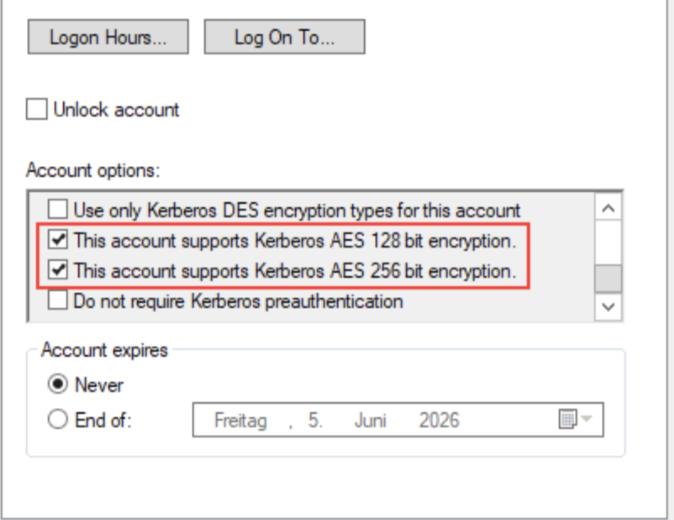
Der zugehörige AD Service Account muss AES 125 bit und oder AES 256 bit erlauben
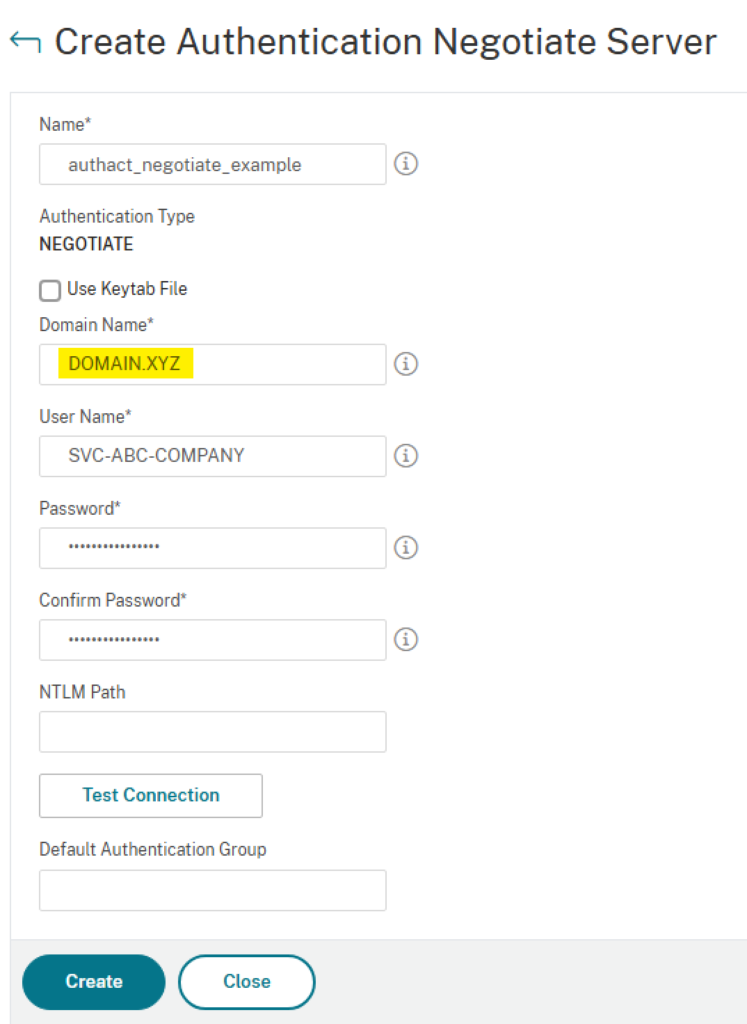
Danach das KeyTab File neu erzeugen und KeyTab File am Netscaler ersetzen. Ganz wichtig dabei ist die Grossschreibung!
Attention! Please note the following regarding to this update:
Customers who already have transitioned to Netscaler LAS can upgrade without any special remarks. If you have not yet changed the Licensing mode, please check the requirements for LAS prior to the update!
Upgrading without proper LAS activation can lead to licensing issues. While these can be resolved by downloading a new file-based license, this workaround is only available until April 15, 2026.
Severity – Critical
Description of Problem
Vulnerabilities have been discovered in NetScaler ADC (formerly Citrix ADC) and NetScaler Gateway (formerly Citrix Gateway). Refer below for further details.
Affected Versions:
The following supported versions of NetScaler ADC and NetScaler Gateway are affected by the vulnerabilities:
CVE-2026-3055:
NetScaler ADC and NetScaler Gateway 14.1 BEFORE 14.1-66.59
NetScaler ADC and NetScaler Gateway 13.1 BEFORE 13.1-62.23
NetScaler ADC FIPS and NDcPP BEFORE 13.1-37.262
CVE-2026-4368:
NetScaler ADC and NetScaler Gateway 14.1-66.54
Note: This bulletin only applies to customer-managed NetScaler ADC and NetScaler Gateway. Cloud Software Group upgrades Citrix-managed cloud services and Citrix-managed Adaptive Authentication with the necessary software updates.
Details
NetScaler ADC and NetScaler Gateway are affected by the vulnerabilities mentioned below:
CVE-ID
Description
Pre-conditions
CWE
CVSS v4.0
CVE-2026-3055
Insufficient input validation leading to memory overread
Citrix ADC or Citrix Gateway must be configured as a SAML IDP
CWE-125: Out-of-bounds Read
CVSS v4.0 Base Score: 9.3(CVSS:4.0/AV:N/AC:L/AT:N/PR:N/UI:N/VC:H/VI:H/VA:H/SC:L/SI:L/SA:L)
CVE-2026-4368
Race Condition leading to User Session Mixup
Appliance must be configured as:Gateway (SSL VPN, ICA Proxy, CVPN, RDP Proxy) OR AAA virtual server
CWE-362: Race Condition
CVSS v4.0 Base Score: 7.7(CVSS:4.0/AV:N/AC:L/AT:P/PR:L/UI:N/VC:H/VI:H/VA:H/SC:N/SI:N/SA:N)
What Customers Should Do
CVE 2026-3055 was identified internally through our ongoing security reviews and broader efforts to strengthen the security of the product.
Cloud Software Group strongly urges affected customers of NetScaler ADC and NetScaler Gateway to install the relevant updated versions as soon as possible.
NetScaler ADC and NetScaler Gateway 14.1-66.59 and later releases
NetScaler ADC and NetScaler Gateway 13.1-62.23 and later releases of 13.1
NetScaler ADC 13.1-FIPS and 13.1-NDcPP 13.1.37.262 and later releases of 13.1-FIPS and 13.1-NDcPP
Note: Customers are recommended to upgrade their appliances to one of the supported versions that address the vulnerabilities.
CVE-2026-3055 :
Customers can determine if they have an appliance configured as a SAML IDP Profile by inspecting their NetScaler Configuration for the specified string:
add authentication samlIdPProfile .*
CVE-2026-4368
Customers can determine if they have an appliance configured as one of the following by inspecting their NetScaler Configuration for the specified strings
An Auth Server (AAA Vserver):
add authentication vserver .*
A Gateway (VPN Vserver, ICA Proxy, CVPN, RDP Proxy) :
Microsoft is investigating two reported zero-day vulnerabilities affecting Microsoft Exchange Server 2013, 2016, and 2019. The first vulnerability, identified as CVE-2022-41040, is a Server-Side Request Forgery (SSRF) vulnerability, while the second, identified as CVE-2022-41082, allows remote code execution (RCE) when PowerShell is accessible to the attacker.
What Customers Should Do
To protect your on-prem Exchange you can bind a responder policy on the Citrix ADC contentswitch handling all the Exchange related traffic: